I Pay $40 for Two AI Subscriptions and Won’t Stop. Here’s Why
Forty dollars a month for ChatGPT and Claude sounds excessive until you do the math. Here's why two AI subscriptions make financial sense.

👁 121 reads
Let’s count this out once, calmly, without that patronizing look people give when they hear I pay for two AI chats at once. Forty dollars a month is roughly the price of two coffee-and-pastry outings in a city center. It’s what I spend on one mediocre restaurant meal that leaves me wishing I’d just made pasta at home. It’s, frankly, an amount most people reading this wouldn’t even notice on their statement if it weren’t labeled “artificial intelligence expense.”
And yet these two twenties trigger a strange resistance in people. As if paying for a tool that genuinely changes how you work is less justified than paying for a streaming service you haven’t opened in three weeks. So I’ll state my thesis upfront and defend it to the end: skimping on a second AI subscription is one of the dumbest economic reflexes for anyone who works with their mind. Yes, I know how that sounds coming from someone who pays for both. Let me explain.

Why Two When One Should Theoretically Be Enough
The most common question I get is: “They do the same thing, why do you need two?” And that’s a question asked by someone who’s never really used both. Because they don’t do the same thing. They have different personalities, different ways of thinking about problems - and that’s not marketing speak, it’s something you feel after a week of intensive work.
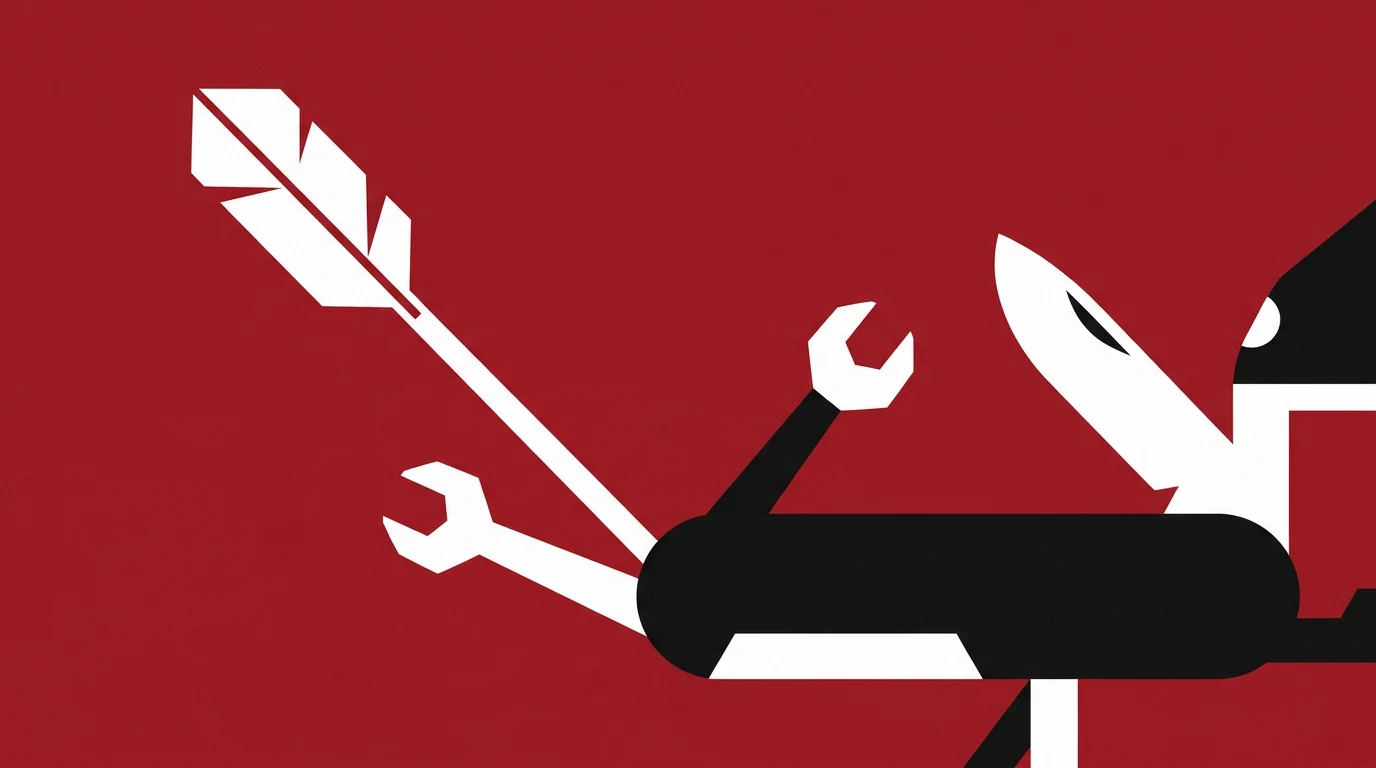
I’ll tell you how I see it from my desk. Claude is the one I go to when I need to think. When I’m writing a long piece, editing, structuring arguments, weighing sentences, searching for that one phrase that doesn’t sound like a corporate brochure. It has something of a good editor who doesn’t suck up to the writer and can tell you when a paragraph is weak. ChatGPT, on the other hand, is my Swiss Army knife. Quick research puzzles, generating images, handling something on the fly, searching the web, switching between modes. These are two different tools pretending to be the same tool.
If I had to boil it down to one sentence: one is my conversation partner, the other is my task assistant. And honestly, I wouldn’t want them to be the same person, because the best conversationalist is rarely also the most efficient executor.
The Accounting You’re Expecting From Me
Alright, I promised specifics, so let’s settle this like an adult, not like a tech enthusiast high on a new toy. Let’s start with how much I actually earn from this, because that’s the heart of the “is it worth it” question.
I work with text. Writing, editing, research, preparing materials. It used to take me a full day plus a good chunk of the next to prepare a solid, long piece: gathering, organizing, first draft, stepping away from the text, editing, editing again. Today the same process fits into one day, sometimes half. Not because AI writes for me - it doesn’t, and anyone who claims otherwise hasn’t read texts that AI actually generates. But because it lifts from my shoulders the most exhausting part: the emptiness of the blank page, mechanical organizing, checking whether I’ve missed anything.
If you value your hour of mental work even modestly, saving several hours a week pays back those forty dollars on the first Monday of the month, before you’ve even finished your morning coffee. The rest of the month is pure profit. And I’m not saying this to sell you a course. I’m saying it because when I last sat down and calculated, I felt foolish for even having hesitated.
Forty dollars for two artificial intelligences isn’t an expense. It’s the cheapest employee I’ve ever hired, and the only one who doesn’t get offended when I make them rewrite something for the tenth time at two in the morning.
But lest you think I’m selling you a fairy tale about miraculous productivity multiplication, there’s another side to this coin, and it’s quite real.
The Trap I Fell Into Myself
The ugliest truth about paying for AI is that the subscription gives you the illusion you’ve already won. That because you’re paying, you’re by definition productive, modern, and ahead of those suckers who still write by hand. It’s exactly the same mechanism that makes people buy gym memberships in January and feel like athletes without lifting anything heavier than that membership card until December.
I know this state from personal experience. There were months when I paid for both tools and opened them maybe twice a week to ask a question that a free model or a simple search engine could have answered just as well. In those months, those forty dollars were simply a tax on the feeling that I’m keeping up. A tax on the fear of falling behind. And that’s the stupidest possible expense, because you’re not paying for a tool, you’re paying to soothe your own conscience.
So if I’m being honest, and an essay without honesty is just advertising in disguise, the value of those two twenties doesn’t come from the mere fact of payment. It comes from using them so intensively it borders on a breathing habit. For someone who checks in on the chat once a week out of curiosity, a second subscription is wasteful. For someone who builds their workday on it, one subscription is too modest a budget.
Why “The Free Version Is Enough” Doesn’t Cut It
And here we come to the argument I hear from intelligent people, so it’s worth taking seriously: “There are free versions, why pay?” Well, free versions are like test-driving a car where you can only drive around the dealership parking lot. They give you the sense you know how it drives, but you haven’t actually hit the highway yet.
The difference between free and paid access isn’t quantitative, that you get more queries. It’s qualitative. By paying, you get access to better, more powerful models, to features that genuinely change how you work, to stability when half the world is hammering the same servers and free users get denied. The moment a tool becomes part of your professional toolkit, skimping on its full version is like buying a professional camera and keeping it in automatic mode because “it takes pictures.”
To put it bluntly: if your time is worth anything, calculating whether it’s worth paying twenty dollars for a better version of a tool you use daily is math whose answer you know before you start. The problem is people don’t count their time. They only count what leaves their account, because that shows up on the statement. Time doesn’t show up, so we pretend it’s free.
Where the Line of Reason Actually Lies
So I don’t come across as someone telling everyone to throw money at tech companies, let me draw a clear line. I don’t think everyone should pay for two AIs. I think most people reading this who work with their minds should pay for at least one, and stop convincing themselves the free version is enough when they open it ten times a day.
A second subscription makes sense in one specific case: when you catch yourself using both tools for different things and regularly getting frustrated with one’s limitations while fleeing to the other. That’s the moment when the second twenty stops being extravagance and becomes logic. For me that moment came long ago, and I haven’t looked back since.
However, paying for three, four, five different models “for comparison” is no longer work, it’s a hobby. Noble, interesting, but let’s call it what it is. I myself had to honestly tell myself to stop collecting subscriptions like postage stamps and stick with the two that actually drive my work. Anything beyond that would be paying for the feeling of staying current, and as we established above, that’s the dumbest reason to spend money.
Google · Your sourcesQuantslant higher in your Google - one clickAdd to preferred sources →The Calculation That Closes the Case
Finally, the simplest possible calculation, without any technological fog. Forty dollars a month is, over a year, an amount many people spend on one weekend trip or a pair of shoes they never wear out anyway. In return I get two tools that shorten my workday, that are with me at any hour, that don’t get sick, don’t have moods, and don’t ask for raises. Tools that - and here’s the whole secret - make me better at what I do, not just faster.
Because that’s the difference that’s hardest to explain to an outsider. They think I’m paying to work less. But I’m paying to be able to take more attempts. Rewrite a paragraph not twice, but eight times. Test an idea I’d normally abandon because I wouldn’t have the energy. Ask something stupid without shame. Those forty dollars buy me not time, but the courage to waste time on attempts that used to be a luxury for me.
So when someone next raises an eyebrow hearing I pay for two AIs at once, I’ll tell them exactly what I’ll tell you now. Don’t ask whether you can afford those forty dollars. Ask how much it costs you every day you work as if we were still in the year when these tools didn’t exist yet. Because that second bill is much, much higher. Only nobody emails it to you on the first of the month.


More on this from QUANTSLANT
 news·Muse Spark Helped Close 5 Open Mathematical ProblemsMeta published six mathematical papers written with Muse Spark in meta.ai chat. Five close open problems, including a counterexample with 384 elements.