James Bond Style AI Prompts: Dictionary for Image and Video
Wardrobe, lighting, location, camera and mood terms for spy-thriller AI images and video, plus an avoid list and three combined prompts.
007All James Bond and AI guides in one place
👁 113 reads
A James Bond style prompt works when you describe the genre’s ingredients - a tuxedo, a casino, low-key light, an anamorphic lens - rather than naming the franchise or an actor. This dictionary gives you the terms, what each one does, and three combined prompts for image and video tools.
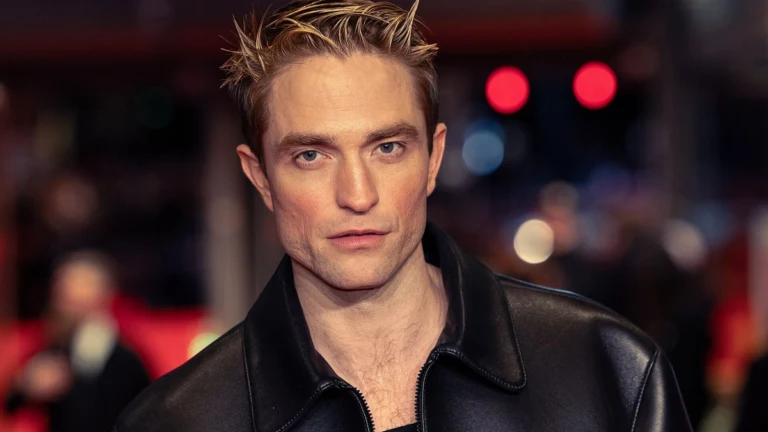
The timing is simple: on 16 November 2026 Amazon MGM Studios announced that Robert Pattinson will play James Bond in the 26th film in the official series, directed by Denis Villeneuve. No release date, title or shooting schedule has been announced, and no trailer exists yet, so anything labelled “Bond 26 official trailer” is fan-made. The rest of this guide stays on craft, because the vocabulary of classic British spy cinema is useful whatever happens next.
How to prompt a James Bond style look with AI
Mainstream image and video generators usually block or restrict photorealistic likenesses of real public figures, and the 007 logo, the gun-barrel sequence and the theme music are protected. So the useful approach is to create original spy-thriller imagery “in the style of a classic British spy film”: a fictional agent in a tuxedo, a casino, a vintage grand tourer, a villain’s lair. Never ask the tool for a real actor’s face or for the 007 mark.
Build every prompt in the same order: subject, wardrobe, location, lighting, lens and camera, mood, aspect ratio. For video, add the camera movement and a duration. Tools such as Midjourney, GPT Image, Nano Banana, Seedance, Kling and Veo all respond to this kind of plain, concrete description, whether you start from text or from a reference image.
The James Bond style AI prompt dictionary
One table covers every group. Use two or three terms from each category rather than all of them; a prompt that lists twenty looks competes with itself.
| Group | Term | What it does in the prompt |
|---|---|---|
| Wardrobe | shawl-lapel tuxedo | Gives the jacket a smooth, rounded collar and the classic evening-wear silhouette. |
| Wardrobe | midnight blue dinner jacket | Shifts black to a deep blue that reads as richer under dark, warm light. |
| Wardrobe | black bow tie, white shirt, cufflinks | Locks in formal detail so the tool does not drift to a modern suit and tie. |
| Wardrobe | belted trench coat | Adds a field-agent look for rain, travel and rooftop scenes. |
| Lighting | low-key lighting | Keeps most of the frame dark with a few bright areas, for tension. |
| Lighting | practical lamps | Puts visible table and wall lamps in the shot as the light sources, giving warm pools of light. |
| Lighting | chiaroscuro | Pushes hard contrast between light and shadow across the face and set. |
| Lighting | golden-hour backlight | Rims the subject with warm light from behind, good for outdoor and mountain shots. |
| Locations | casino, baccarat table | Sets a high-stakes, glamorous interior with green baize, chandeliers and chips. |
| Locations | alpine summit | Gives snow, thin air, glass and timber architecture, and a sense of isolation. |
| Locations | harbour at night | Adds wet quays, cranes, moored yachts and reflected lights. |
| Locations | brutalist headquarters | Produces raw concrete, hard geometry and a cold institutional or villainous feel. |
| Camera | anamorphic lens | Suggests wide cinematic framing, oval bokeh and horizontal flares. |
| Camera | slow dolly-in | Moves the camera steadily toward the subject; mainly for video prompts. |
| Camera | crane shot, rising | Lifts the view up and away to reveal the scale of the location. |
| Camera | 2.39:1 | Sets the wide cinema aspect ratio; use the tool’s aspect-ratio setting where one exists. |
| Mood | suave, understated, cold elegance | Keeps the performance calm and controlled rather than action-movie loud. |
| Mood | glamorous menace, mid-century | Blends luxury with danger and nudges props and décor toward a vintage look. |
| Avoid | logos, brand marks, “007” | Protected or restricted; leave them out and add “no text, no logos” as a negative instruction. |
| Avoid | the gun-barrel sequence | Protected and instantly recognisable; describe a generic opening shot instead. |
| Avoid | real actors’ names | Likenesses of real people are usually blocked or restricted; describe an original character. |
| Avoid | theme-music references | Protected; for audio, describe instruments and tempo instead, such as brassy spy-jazz with tremolo guitar. |
Using the terms well
Wardrobe and props
Specify cut and colour together: “midnight blue shawl-lapel tuxedo” is far stronger than “nice suit”. Small props carry the genre. A vodka martini on the table nods to Bond’s famous “shaken, not stirred” order, a white cat on a villain’s lap echoes how Blofeld, head of SPECTRE, is often shown, and a cluttered workshop of gadgets evokes Q Branch, the gadget section of MI6.
Lighting
Lighting does more than any other group to make an image feel like a film still. Pair low-key lighting with practical lamps for interiors, and use golden-hour backlight outdoors. Chiaroscuro is strong, so one use per prompt is enough.
Locations
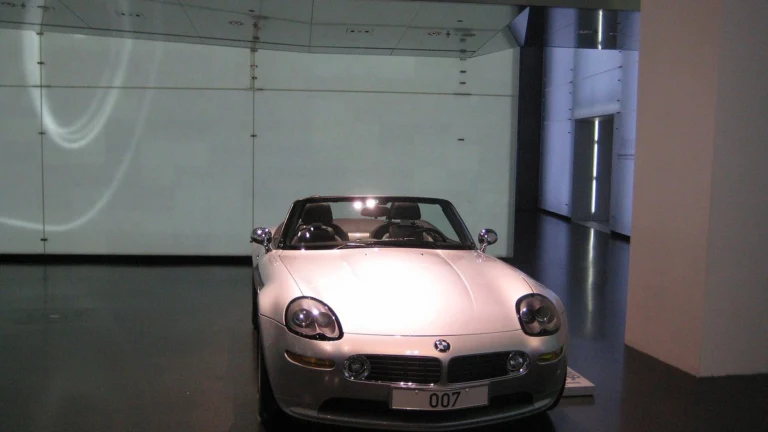
The series is known for travel, and you can borrow that variety without copying any scene. A casino nods to the high-stakes poker game at the centre of Casino Royale (2006). An alpine summit recalls the Swiss Alps ski chases and the mountain-top restaurant Piz Gloria in On Her Majesty’s Secret Service (1969). Japanese castle courtyards echo You Only Live Twice (1967), which filmed at Himeji Castle. Rooftop chases over a crowded old-city bazaar recall Skyfall (2012), which opens in Istanbul. Keep the place generic, say “mountain-top restaurant” and not a named building, and the result stays original.
Camera
For stills, “anamorphic” and “2.39:1” are enough to get a widescreen feel. For video, give one movement only: a dolly-in, a crane rise or a slow pan. Stacking several movements in a short clip tends to produce muddled motion, so I’d keep it to one and state the duration.
Mood and the avoid list
Mood words work best as two or three adjectives at the end of the prompt. The avoid list is simple: leave out logos, the gun-barrel and real names, and add a short negative instruction such as “no text, no watermark” if the tool supports one.
Three combined James Bond style prompts
1. Casino portrait (image)
A fictional male secret agent in his late thirties, wearing a midnight blue shawl-lapel tuxedo, white shirt and black bow tie, seated at a baccarat table in an opulent European casino at night. Low-key lighting, warm practical lamps on the tables, deep chiaroscuro shadows, a vodka martini beside his hand. Shot on a 50mm anamorphic lens, shallow depth of field, calm and dangerous mood, fine film grain, aspect ratio 2.39:1. No text, no logos, no watermark.
For variants, swap the casino for a yacht deck or a hotel bar, or change the jacket to a charcoal suit for a daytime feel. Moving from 50mm to 85mm gives a tighter, more intimate portrait.
2. Alpine summit (video)
Wide shot of a lone fictional agent in a belted camel trench coat and dark scarf, walking across a snowy terrace outside a glass-and-timber mountain-top restaurant on an alpine summit. Golden-hour backlight rims his shoulders, wind lifts powdery snow, distant peaks glow orange. Anamorphic lens, aspect ratio 2.39:1. Camera: slow dolly-in from behind, steady and smooth. Duration 8 seconds. Mood: isolated, tense, elegant. No text, no logos.
Change the time of day to blue-hour dusk for colder light, or swap the dolly-in for a rising crane shot to emphasise the scale of the mountains. If your tool supports image-to-video, feed it a still from a similar prompt first.
3. Night harbour and brutalist HQ (video)
A fictional agent in a black overcoat steps out of a vintage grand tourer onto a wet harbour quay at night, a brutalist concrete headquarters towering behind with a few lit windows. Low-key lighting, sodium streetlamps as practical lights, reflections on the water, thin mist. Camera: crane shot rising slowly from street level to reveal the building. Anamorphic lens flare, aspect ratio 2.39:1, duration 10 seconds. Mood: cold elegance, quiet menace.
To get variants, replace the overcoat with a trench coat in light rain, or make the building a glass clifftop lair for a villain’s-hideout feel. Shortening the duration to 5 seconds usually keeps the motion cleaner.
Build your own prompt library
Keep a note with one line per group from the table and swap a single term at a time. Changing only the lighting or only the location shows you what each word does, which is how a personal dictionary beats any copied list.
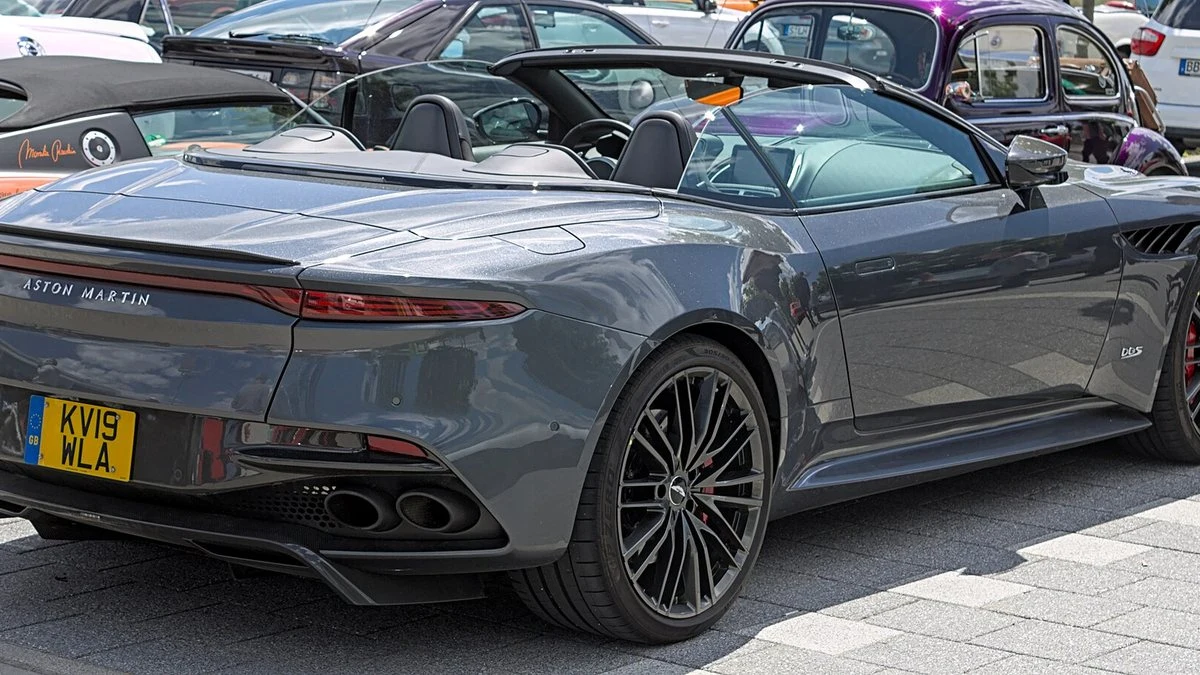
Photo: Alexander Migl / CC BY-SA 4.0 / Wikimedia Commons
More on this from QUANTSLANT

 news·Ideogram 4.6 can recolour a sweater. How much of the portrait survives?I handed the editor a portrait of a woman in an ochre sweater and asked for cobalt blue.