AI Designed a Drug, but Patent Law Says Only Humans Can Be Inventors
Insilico Medicine credited generative AI with discovering a pulmonary fibrosis drug candidate, then named five humans - and no AI - as inventors on the patent, exposing a growing tension between AI drug discovery and intellectual-property law.
👁 114 reads
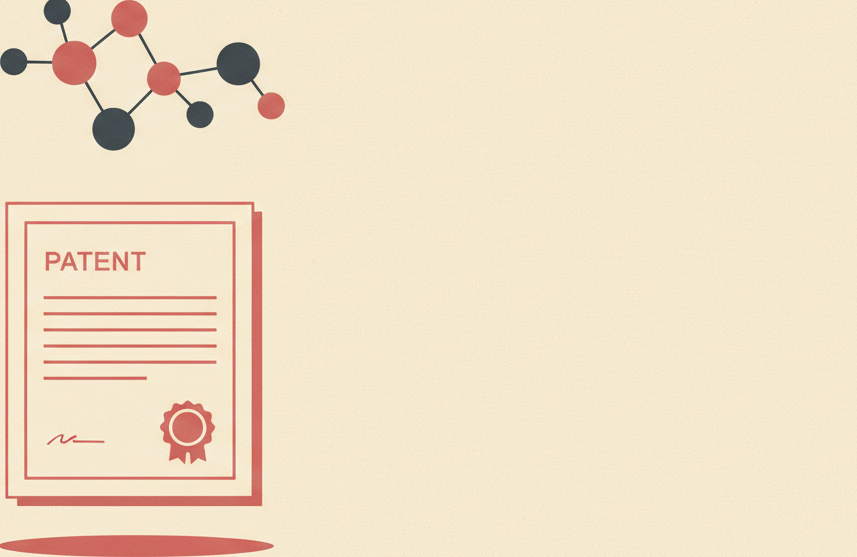
Insilico Medicine publicly declared that a promising pulmonary fibrosis drug candidate had been “discovered by” generative AI - then filed a patent naming five humans as inventors and made no mention of AI at all.
- Insilico Medicine publicly claimed its AI 'discovered' a pulmonary fibrosis drug, but its patent application listed only five human inventors
- Under current patent law, AI cannot be named as an inventor regardless of how central it was to a discovery
- As AI models generate drug designs with increasing ease, legal experts warn the question of what counts as invention will become harder to answer
The contradiction, reported by MIT Technology Review, is more than a branding inconsistency. It reflects a hard limit built into intellectual-property law: no matter how central an AI system is to producing an invention, only humans can receive legal credit for it. That rule holds across major patent jurisdictions and has so far survived several court challenges mounted by advocates of AI inventorship.
For Insilico Medicine, the AI in question was the company’s own suite of computer models, which it used to propose the molecular structure of the drug candidate. The company was enthusiastic enough about the AI’s role to publicise it prominently. When legal rights were at stake, however, the calculus shifted entirely toward the human researchers on the project.
Google · Your sourcesQuantslant higher in your Google - one clickAdd to preferred sources →Why the gap between credit and inventorship is widening
The Insilico case is not an isolated quirk. Across the pharmaceutical industry, AI tools are being used to generate, filter, and optimise drug candidates at a scale and speed no human team could match. As MIT Technology Review notes, AI models are now capable of generating drug designs “as easily as ChatGPT can write a thank-you note.” That growing capability makes the inventorship question progressively harder to sidestep.
Patent law was designed around a human inventor who conceives of an idea and reduces it to practice. When an AI system proposes a novel molecule - selecting it from a vast chemical space that no human explicitly searched - it is genuinely unclear which human, if any, can be said to have “conceived” of that specific structure. Courts and patent offices have not yet produced a consistent answer.
The practical stakes are substantial. Patent protection underpins the economics of drug development, giving companies the exclusive rights they need to justify the cost of bringing a molecule through clinical trials. If AI-generated inventions cannot be cleanly assigned to human inventors, companies face uncertainty about whether those patents are valid and defensible.
Legal scholars and industry observers suggest several possible paths: broadening inventorship definitions, creating a new category of AI-assisted invention, or requiring disclosure of AI’s role without granting it legal status. None of those options has yet gained traction in any major legislature.
For now, companies like Insilico Medicine are navigating the gap by assigning inventorship to the humans who directed, trained, or selected outputs from AI systems - a workaround that may become increasingly strained as the AI’s contribution grows harder to attribute to any individual person.

More on this from QUANTSLANT
 news·Inherent Claims 27B Agent Beat Claude, GPT-5.5 at Research