They Bought Books to Cut Them Apart. The Court Said That Was Legal.
Anthropic bought books, sliced off their spines and scanned the pages. A judge ruled that fair use. The piracy, though, cost the company one and a half billion dollars. The deeper shift, however, is happening not in a courtroom but in the recording studio and the translator's inbox.

👁 116 reads
Early in 2024, Anthropic launched an internal project codenamed Panama. Documents later disclosed in court showed its goal was to digitise “all the books in the world.” The method was brutally simple: buy a copy, slice off the spine, run the pages through a scanner, send the paper to be pulped.
AI companies started buying up used bookshops. Not because they were short of text, the internet is full of it, but because a printed book is clean text: written by a human, edited, fact-checked, free of the synthetic slurry that has already clogged the web. As models increasingly train on what other models have produced, old paper became a strategic raw material.
And that is where things get interesting, because the court decided it was all legal.
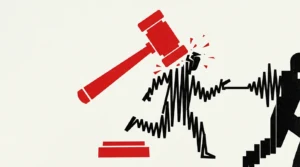
The ruling that cut the book in two
In June 2025, Judge William Alsup of the federal court in California issued a decision the tech industry read as a victory and writers read as a sentence. Alsup drew a line between two things that had previously been lumped together.
Training a model on legitimately purchased books, he ruled, was transformative fair use. The company bought a copy, made a digital copy for its own internal purposes, never distributed it, and destroyed the physical original. In legal terms, no additional copy entered circulation. Cutting up books: permitted.
What was not permitted was downloading pirated libraries. Anthropic had used collections from LibGen and PiLiMi, and Alsup treated that very differently. The result was the largest payout in the history of American copyright law.
The settlement in Bartz v. Anthropic, announced in late August and early September 2025, came to one and a half billion dollars. It covered nearly half a million works, working out to roughly three thousand dollars per title. The plaintiffs were thriller writer Andrea Bartz and nonfiction authors Charles Graeber and Kirk Wallace Johnson, three people representing hundreds of thousands of others. The settlement covers only past claims. It does not grant the company a licence going forward and covers nothing that occurred after 25 August 2025.
The practical meaning for a writer is stark. Your book can be bought, cut apart and scanned, and you have no say. But if someone downloads it from a torrent site, someone pays.
Two and a half thousand dollars per title
Once it was established that training on legally purchased books is permitted, the obvious question became: why pay authors at all? The answer: to avoid further litigation and to have a clean chain of rights.
The first major publisher to come forward with such an offer was HarperCollins. In November 2024, it offered authors of backlist nonfiction a licensing deal for model training, with Microsoft as the partner. The terms: five thousand dollars per title, split fifty-fifty between publisher and author, a three-year term, opt-in only. The author’s take: two and a half thousand dollars.
The reaction was fierce. Agents and many authors considered the sum an insult for a book that takes years to write. The Authors Guild warned against accepting such offers without collective rate negotiation.
But some took the cheque and said so publicly. American author Josh Bernoff laid out his reasoning plainly: his book was already in the models anyway, two and a half thousand is more than nothing, and a three-year licence means he is not giving anything away permanently. It is hard to fault the arithmetic. It is equally hard to miss that this is exactly the logic of being paid for something that has already been taken.
The organisation that broke apart over this question
Not everyone survived simply taking a position. NaNoWriMo, the American organisation behind the annual November novel-writing marathon, announced in 2024 that it neither supported nor condemned the use of AI in writing. Then it added one sentence too many.
Categorically condemning AI has classist and ableist undertones.
From NaNoWriMo’s statement on AI, 2024
The sentence was an attempt to defend people for whom writing is harder, because of disability or lack of formal education. Noble in theory. In practice, an organisation funded by writers’ membership fees had told those writers that their objections were a form of prejudice.
The community responded immediately. Daniel José Older and Maureen Johnson, a New York Times bestselling author, were among those who resigned from the writers’ board, citing concern that participants’ work would be used to train models. Other prominent authors publicly distanced themselves.
The organisation did not survive. In April 2025, NaNoWriMo announced it was shutting down, officially citing financial reasons, but the numbers tell their own story: donations fell from 612,000 dollars in 2021 to 373,000 in 2023, and collapsed further after the AI statement. Twenty years of writing community came apart over a single paragraph about technology.
Something opposite emerged in response. The Authors Guild launched a “Human Authored” certification, a registered mark that an author or publisher can attach to a book written by a human, permitting only minor AI use such as spellchecking. The programme launched in beta for members in January 2025, then opened to all authors publishing in the United States. In other words, “no AI” has become a product attribute that requires certification, like “gluten-free” on a food label.
A hundred voices, four languages
The second part of this revolution is happening not at the training stage but at the production stage, and it is hitting the profession least mentioned in discussions about AI.
In May 2025, Audible launched a fully managed service for publishers to turn a manuscript into an audiobook narrated by a synthetic voice. Over a hundred voices to choose from, in four languages: English, Spanish, French and Italian. Publishers can hand the whole process to Amazon or run it themselves using the same tools. Later that year came AI translation in beta, from English into Spanish, French, Italian and German.
This is a breakthrough opportunity to expand the accessibility of audiobooks.
Bob Carrigan, President of Audible
The vast majority of books have never had an audio edition, because recording with a narrator costs enough that it only makes sense for titles with predictable sales. Synthesis opens up a catalogue that simply did not exist before, including for blind and visually impaired readers, for whom this is not a convenience but access.
At the same time, that statement was made in an industry where reading books aloud is a profession. Stephen Briggs, the narrator known for his recordings of Terry Pratchett’s prose, was publicly asking where this leads, and it was not a rhetorical question: for him it is a question of work.
Amazon is trying to find a middle ground through its Voice Replica programme: a narrator creates a digital copy of their own voice from their existing recordings, selects projects themselves, listens to the result and can make corrections. The Audio Publishers Association recommends distinguishing in metadata between an “AI voice” and an “authorised voice replica,” and both Audible and Kobo require disclosure. The distinction is sensible, as long as anyone actually reads it.
Poland: eighty-two percent
In the Polish market, this dispute has a hard set of numbers behind it, and recent ones. On 27 March 2026, the Ariadna national research panel conducted a survey on attitudes toward synthetic narrators, commissioned by Audioteka, a leading Polish audiobook platform. The results are unambiguous in a way rarely seen in social research.
Eighty-two percent of respondents prefer a human voice, fifty percent of them strongly. Three percent prefer an AI voice. Seventy percent expect AI-generated content to be clearly labelled. Fifty-four percent rated the quality of AI-narrated audiobooks negatively; thirteen percent rated it positively.
In April 2026, Audioteka responded with a “human-first” declaration: artificial intelligence may support production and marketing, but it does not replace creators, actors or narrators in making audio content, including audiobooks, high-budget productions and audio dramas. The company also committed to not cloning actors’ voices and to clearly disclosing any use of AI.
A cynic will say: that is marketing, not ethics. Probably partly true. It is hard to think of a better differentiator in a market where four-fifths of customers have stated their preference. But this is precisely what an effective defence against automation looks like. Not an appeal, but a demonstration that audiences pay for a human.
The clause that did not exist ten years ago
The quietest losses are falling on translators. Not because machines translate literary prose well, they do not, but because a publisher can instruct a translator to “clean up” a machine output and pay a fraction of the normal rate for it.
The Association of Literary Translators in Poland (Stowarzyszenie Tłumaczy Literatury) has been saying this for some time. Its president, Rafał Lisowski, warned as early as September 2024 that Poland’s amendment to copyright law was working in the opposite direction to the one intended.
It limits the rights of creators and deprives them of any chance of claiming remuneration for the use of their content.
Rafał Lisowski, president of the Association of Literary Translators, on the copyright amendment
The association is calling for a real mechanism allowing creators to opt out of data mining, for labelling of AI-generated content in line with the EU AI Act, and for transparent information about what models are trained on.
The most telling detail, though, is one Lisowski draws from market practice. Foreign publishers granting translation licences have started inserting clauses into contracts that prohibit machine translation or AI-assisted translation.
That is a measure of how much has changed. Ten years ago such a clause would have been an oddity, like a prohibition on copying a book out by hand with a quill. Today it is a standard safeguard, because everyone in the chain knows the temptation exists and that under enough time pressure someone will give in to it.
The first books translated with AI assistance are already on the Polish market. The publication cited as the earliest such case was a Polish edition of a digital humanities primer, with human editorial oversight of the translation retained. And machine-generated titles, mostly self-help, are reaching Polish e-book retailers, as the tech-books outlet Świat Czytników has reported. Nobody buys them knowingly. They simply sit on the shelf next to everything else.
Google · Your sourcesQuantslant higher in your Google - one clickAdd to preferred sources →What remains
Of everything in this story, one asymmetry strikes me most.
When it came to training data, authors got a ruling, a settlement and real money. Three thousand dollars per title is not a fortune, but it is a sum that acknowledges something was taken. When it comes to production, audiobooks, translations, the entire pipeline that turns a manuscript into a product, there is no ruling, no settlement and no rate. There is only the publisher’s decision whether to pay a narrator this year or click “generate.”
That second part matters far more to the people who make their living from books. And it is there that Poland has something most markets lack: a survey in which four-fifths of listeners say clearly what they want, and a company that has taken on a public commitment on that basis.
Because for all the noise about copyright, the real verdict is not handed down by a judge in California. It is handed down by someone standing in a bookshop with their phone, choosing between two editions of the same book, one narrated by a human and one a few coins cheaper. American authors decided that person needs help making the choice, and invented a “written by a human” stamp. There is something disarmingly sad about that solution. But if the Audioteka survey is telling the truth, it might also be a solution that works.


More on this from QUANTSLANT
 magazine·How the Amodei Siblings Built a $350 Billion AI EmpireAnthropic's $350 billion valuation is the payoff of a deliberate bet by Dario and Daniela Amodei.