HiDream-O1-Video API Launches with Image-to-Video Only
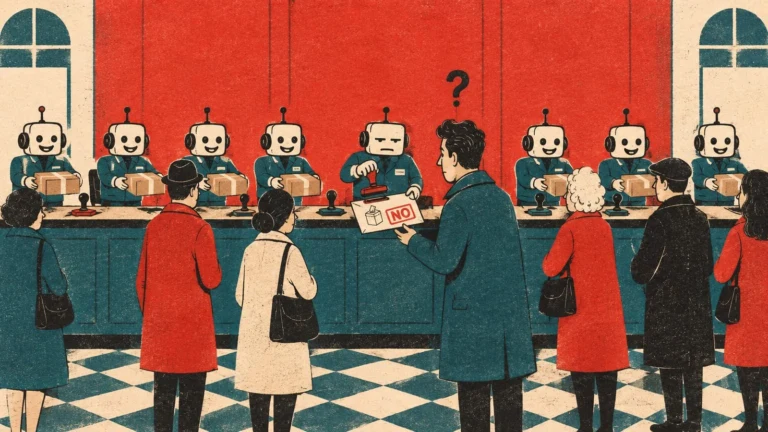
HiDream promised omnimodal text, image, and video input. The HiDream-O1-Video public API only accepts an image, ranking 6th on Artificial Analysis.
👁 122 reads
HiDream.ai promised a video model in September capable of taking text, image, and video as inputs. Yet the public HiDream-O1-Video-1.0 API only accepts a single image, ranking 6th on the Artificial Analysis image-to-video leaderboard (1175 Elo) as of October 11. I detailed the model’s architecture in my guide to HiDream-O1-Video.
Key takeaways (October 11, 2026)
- Announced features: text, image, and video inputs, 5-20 s durations, 1080p, native audio.
- HiHarness API: image only + optional prompt + 10 s toggle.
- AA leaderboard: 6th place in image-to-video, unlisted in text-to-video.
- vivago: two contradictory statements regarding availability (September 30 and October 9).
What was announced in September
On September 15, 2026, Beijing-based unicorn HiDream.ai, founded by Dr. Mei Tao, showcased the HD-V1 model in China. Two days later, on September 17, an English press release announced HiDream-O1-Video-1.0. The description was ambitious: a “natively omnimodal” model accepting text, image, and video inputs, generating 1080p clips from 5 to 20 seconds, automatically adjusting duration to the scene’s action, and outputting synchronized audio, including lip sync. The company heavily highlighted physical consistency: gravity, collisions, and material deformation.
That same September 17 release noted the model was “in internal testing,” with availability scheduled “in the near future.”
What actually launched in the API
Documentation on the HiHarness platform (verified October 11) describes HiDream-O1-Video-1.0 strictly as a “single-image-to-video model.” The parameter list is minimal:
image- required image input via URL or Base64, between 40 KB and 20 MB;prompt- optional guidance prompt;force_10s- the sole duration toggle: let the model decide or force exactly 10 s;request_id- custom task identifier.
There is no text-to-video mode, no video input, no multi-reference support, no resolution selection, and no audio switch. This gap between the pitch and the API was also highlighted by AlphaSignal (Oct 9) and OrcaRouter (Oct 10).
| Feature | Announced (Sept 15-17) | API (Oct 11) |
|---|---|---|
| Text-to-video | Yes | No |
| Image-to-video | Yes | Yes |
| Video input | Yes | No |
| Duration | 5-20 s | Model auto or 10 s |
| Resolution | 1080p | No parameter |
| Audio | Native | Undocumented |
Rankings: Strong, but lower than at debut
At launch, HiDream touted a 4th-place position on Artificial Analysis’s “I2V With Audio” benchmark and 8th on Arena.ai. On September 30, Arena.ai placed it 7th on its image-to-video leaderboard (1456 pts). On the main AA table as of October 11, it sits in 6th place with a score of 1175 and a confidence interval of 1165-1185.
The scale starts at 1000 points. Ranks 2 through 6 are separated by just 6 points with overlapping confidence intervals, meaning the dip from 4th to 6th does not indicate that the model is noticeably worse than Vidu Q4 or Seedance 2.0. The only model clearly outperforming the cluster is MiniMax H3 Max. HiDream does not appear on the text-to-video leaderboard, which aligns with its absence in the API.
vivago: Conflicting rollout signals
Rollout details inside end-user applications remain murky. On September 30, the official @vivago_ai account posted that HiDream-O1 Video was “now available in vivago R1 Studio.” On October 9, HiDream announced the global availability of vivago R1, an AI agent for creating videos up to 5 minutes long, stating in that announcement that O1-Video would join R1 “in an upcoming update.” HiDream has not clarified which statement holds true.
All three models are now available in vivago R1 Studio
- vivago.ai (@vivago_ai) September 30, 2026
What this means for creators
- You must always provide an image. Starting frames need to be created upfront, whether via the open-source HiDream-O1-Image (MIT license) or another generator.
- Separate account required. The model is not hosted on fal.ai, Replicate, or OpenRouter (checked October 11), leaving only the HiHarness API or vivago.
- Unpublished pricing. The only public figure is the $5.80 per minute benchmarked by AA, which works out to roughly $0.97 per 10-second generation. HiDream does not publish an official price list.
- Language support is unconfirmed. The developer does not detail non-English handling, so sticking to English prompts is advisable.
- If you need text-to-video, consider alternatives like Wan 3.0 or H3 Max, which feature direct text generation and wider aggregator support.
To get started, you can try out prompt patterns from our overview of what HiDream-O1-Video can do. I will update this coverage as the missing modes land in the API documentation.
Google · Your sourcesQuantslant higher in your Google - one clickAdd to preferred sources →Sources and verification date
- HiDream announcement (Sept 17, 2026), QbitAI (Sept 15, 2026)
- HiHarness documentation (Oct 11, 2026)
- Artificial Analysis (Oct 11, 2026)
- vivago R1 announcement (Oct 9, 2026)
- OrcaRouter (Oct 10, 2026), AlphaSignal (Oct 9, 2026)