New Local AI Models, October 2026: Video, Images and Music
Hands-on RTX 4090 tests of Kandinsky 6.0, Qwen-Image 2.1 Turbo, FLUX 3 Klein and YuE2, with speed, VRAM and license details.
👁 112 reads
Several open models worth running on your own computer arrived in October 2026: Kandinsky 6.0 for video with audio, Qwen-Image 2.1 Turbo and FLUX 3 Image Klein for images, and YuE2 for songs with vocals. I downloaded them, ran them in ComfyUI on an RTX 4090, and measured generation times, memory use and how well they handled Polish. Here’s a roundup of the results, with links to the full tests.
At a glance, as of October 17, 2026
- Video: Kandinsky 6.0 Lite makes a 5-second clip with audio in about 2 minutes; Pro takes about 6.5 minutes. Both use the MIT license.
- Images: Qwen-Image 2.1 Turbo generates an image in 3-4 seconds instead of 13-20 seconds. Its license is for research only.
- Music: YuE2 sings clearly in Polish, with an average of 91.2% of words recognised across 3 tests. ACE-Step 1.5 was more consistent, at 95.6%, and uses the MIT license.
- FLUX 3 Klein: Generates an image in 6-7 seconds using just 7.5 GB of VRAM, so it can also fit on 8-12 GB graphics cards.
Series: Local AI on an RTX 4090, tested October 17, 2026
- Roundup: new local AI models (October 2026) (you’re here)
- AI influencers without the plastic look: 5 characters across 5 models
- Talking AI influencer: Polish speech in video
- FLUX 3 Image Klein: 7.5 GB VRAM, 6 seconds per image
- Qwen-Image 2.1 Turbo: 4 seconds per image
- Kandinsky 6.0: video with audio and Polish speech
- YuE2 and 3 other models: local Polish song generation
Test setup
- RTX 4090 24 GB graphics card, 64 GB RAM, i9-14900KF processor, Windows 11.
- ComfyUI 0.41.0 (updated from 0.37, which does not support FLUX 3, YuE2 or Qwen Turbo).
- Models stored on an 8 TB external USB SSD. First loads would be faster from an NVMe drive.
- I measured time from submitting a job to the saved file. VRAM figures are peak usage across the entire card, measured with nvidia-smi.
Local AI model comparison
| Model | Use | RTX 4090 result | License |
|---|---|---|---|
| Kandinsky 6.0 Lite | 5-second video with audio | 1:51-2:28 min, 19-20 GB | MIT |
| Kandinsky 6.0 Pro (int8) | 5-second video with audio | 6:18-6:52 min, 21 GB + 29 GB RAM | MIT |
| Qwen-Image 2.1 Turbo | Images | 3-4 seconds per image, 17-19 GB | Qwen Research |
| YuE2 | Songs with vocals | 2-minute song in 1-2 min, 13-16 GB | CC BY-NC 4.0 |
| DiffRhythm 2 | Songs with vocals | About 1 minute per 2-minute song; English and Chinese only | Apache 2.0 |
| FLUX 3 Image Klein | Images and editing | 6-7 seconds per image, 7.5 GB | FLUX Kommunity |
Video generation: Kandinsky 6.0
The month’s most interesting release. Kandinsky 6.0 from Kandinsky Lab generates video and audio in one pass: speech with lip movement, sound effects and background music. The 3-billion-parameter Lite version fits within 24 GB; Pro has 29 billion parameters and runs on an RTX 4090 only with some weights offloaded to RAM.
- Pro spoke 7 of 9 words correctly in a Polish sentence. Translation of the original Polish test sentence: “Good morning! Apples straight from the orchard, sweet as honey!” It handled the English test flawlessly.
- Lite is more than 3 times faster, but mangles Polish speech.
- The MIT license has no country exclusions. That matters because the weights for competing model MiniMax H3 cannot legally be used in the EU.
The test of Kandinsky 6.0 Video locally has eight clips with audio, a timing table and installation instructions.
Image generation: Qwen-Image 2.1 Turbo
This distilled version of the top open image model in the Artificial Analysis ranking uses 8 steps instead of 25. The quality difference is hard to spot without comparing the results side by side. In my test, the Polish text translated as “JAZZ ON THE ODER” and “VINEGAR 12” (these are faithful translations of the Polish original; the actual test was in Polish) came out correctly, while another rendered with corrupted lettering in the original Polish test.
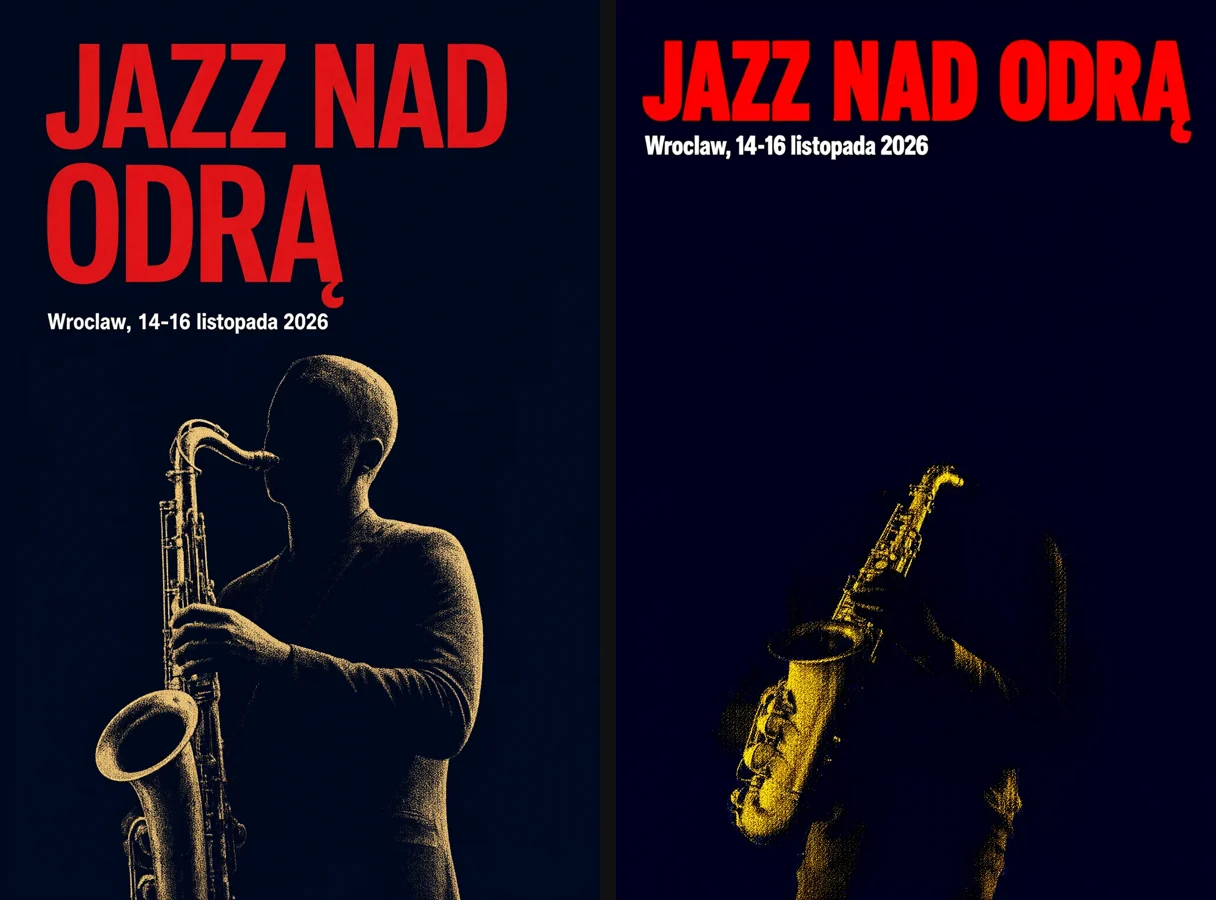
See the full comparison of four prompts in the Qwen-Image 2.1 Turbo local test.
Image generation: FLUX 3 Image Klein
Black Forest Labs released the first open model in the FLUX 3 family on October 13-15. Klein has 5.6 billion parameters and can generate images from text, edit images and create compositions using up to 10 reference images. Its text encoder is Qwen3-VL-4B, and it uses the same VAE as FLUX.2. ComfyUI has native support from version 0.41.
- ComfyUI files: 5.83 GB int8 model, 4.86 GB int8 text encoder and 0.34 GB VAE.
- The manufacturer explicitly recommends expanding your prompt before generation, using a separate “prompt upsampler” with Qwen 3.5 9B or any language model. Short prompts produce generic images.
- The repository requires you to accept the FLUX Kommunity license, so you need a Hugging Face account and token to download it.
My measurements: 6-7 seconds for a 1024×1536 image (15 steps, int8), with peak usage of 7.5 GB VRAM across the entire card - less than half the Qwen Turbo figure. Polish text performed as it did in Qwen Turbo: translated as “ODER” and “12” (faithful translations of the Polish original; the actual test was in Polish) came out correctly, while another rendered with corrupted lettering in the original Polish test. The FLUX 3 Image Klein local test compares the models using the same prompts and explains how to download it. For the cloud version, see the FLUX 3 Image guide.
Music generation: YuE2 and four-model comparison
I gave the same Polish lyrics - a ballad with two verses and two choruses - to four local models, then ran the results through Whisper large-v3. I measured what percentage of the written words could be recognised in the recording. The test was conducted in Polish.
| Model | Polish: words recognised | English | License |
|---|---|---|---|
| ACE-Step 1.5 | 95.6% (average of 3) | 96.1% | MIT |
| YuE2 | 91.2% (84-99%) | 100% | CC BY-NC 4.0 |
| MiniMax Music 3 | 89.2%; cuts songs short | 92.1% | MiniMax Community |
| DiffRhythm 2 | 4.8% (no Polish support) | 100% | Apache 2.0 |
YuE2 had the best single Polish result (98.8%) and was flawless in English, but its results varied widely and its license does not allow commercial use. ACE-Step 1.5 was the most consistent and can be used commercially. The YuE2 Polish-language test has more details, audio samples and settings.
AI influencers: images and video
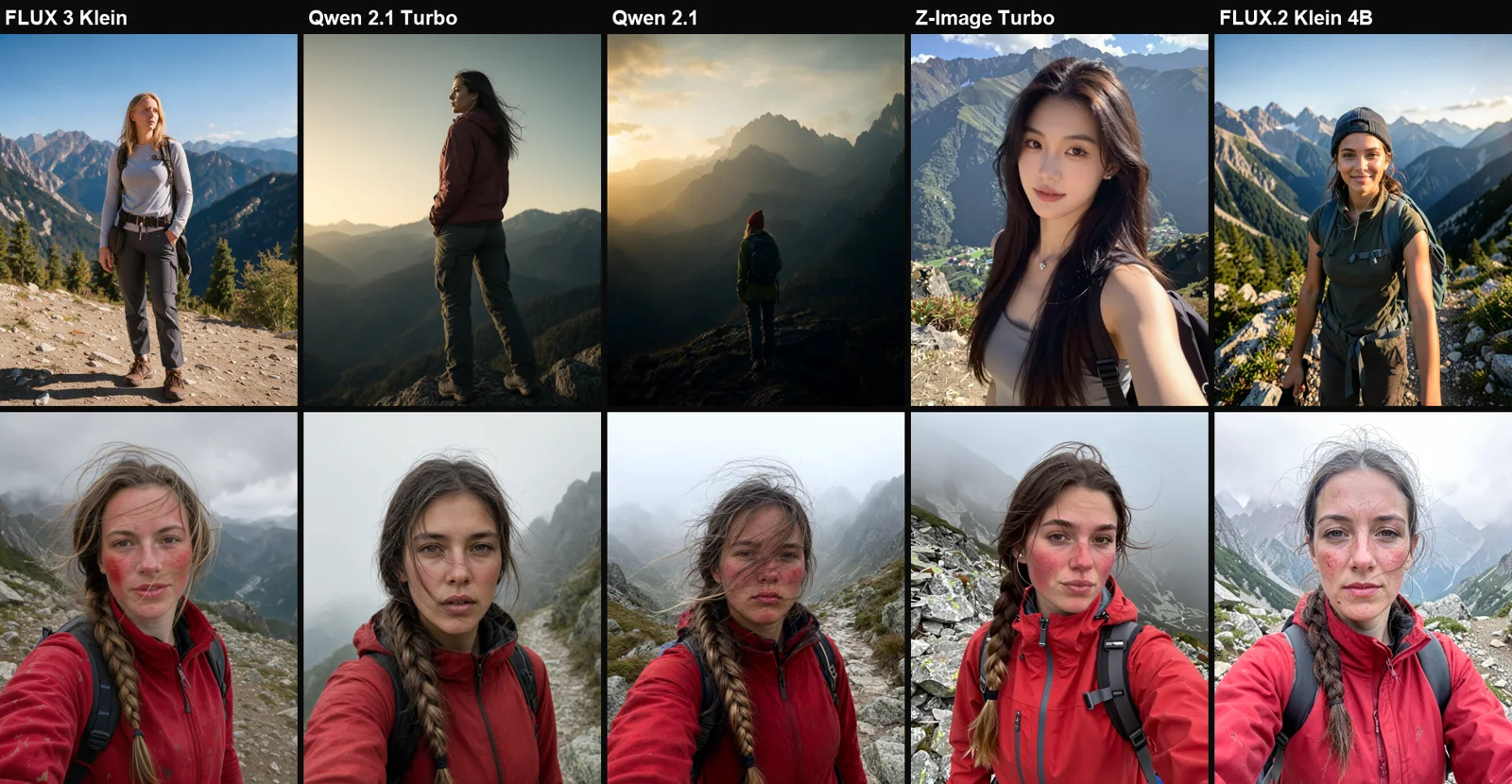
I also ran a hands-on test with the same models: five very different AI influencers without a “plastic” look, with two images per character across five image models, followed by 5-second clips with Polish speech. For monetised images, FLUX.2 Klein 4B (Apache 2.0) performed best; for video with speech, Kandinsky 6.0 Pro led, with an average of 65% of words recognised. The speech test was in Polish.
- AI influencers without the plastic look: 125 images and a prompt template
- Talking AI influencer: 15 clips with Kandinsky 6 and Wan 2.2
Other releases, and models I didn’t download
- MiniMax H3 (video with audio, 33B): its weight license excludes the EU, US, UK and South Korea. Even the reduced FastH3 version, which needs 8 GB of VRAM, does not change that.
- HY Image 3.5 Preview from Tencent: supported in ComfyUI from October 13. I covered it in a test of text rendering and image editing.
- MAGI-2 and LTX-2.5: compared in Open video models in 2026.
How to get started
- Install or update ComfyUI to 0.41 with the ComfyUI beginner’s guide.
- Start with FLUX 3 Klein (about 11 GB; it can run on 8-12 GB graphics cards) or Qwen-Image 2.1 Turbo (7.3 GB + 10 GB of shared files; the fastest option on a 24 GB card).
- For video, try Kandinsky 6.0 Lite (6.4 GB + about 18 GB of shared files).
- For songs, choose ACE-Step 1.5 (the most consistent in Polish, MIT) or YuE2 (7.8 GB + 1.4 GB) for English lyrics and private use.
My local AI guide has the full list of models I’ve tested locally, including language models.
Frequently asked questions
Is a 16 GB graphics card enough?
For Qwen Turbo, YuE2 and Kandinsky Lite, yes, but you’ll need to offload some weights to RAM, and they’ll run more slowly than in my tests. I don’t recommend Kandinsky 6 Pro on a 16 GB card.
Which of these models can you use commercially?
Kandinsky 6.0 (MIT), DiffRhythm 2 (Apache 2.0) and ACE-Step 1.5 (MIT). Qwen-Image 2.1 Turbo is licensed for research only, and YuE2 uses CC BY-NC 4.0. FLUX 3 Klein has its own FLUX Kommunity license, so read the terms before using it to make money.
How much disk space do these models need?
Everything on this list, including Kandinsky Pro in int8 but not the official bf16 version, takes about 100 GB. Kandinsky Pro alone takes 30.5 GB in int8 or 60.3 GB in bf16.
Can you run these models on a Mac?
I tested only on Windows with an NVIDIA graphics card. Some models have MLX versions for Mac, including YuE2 and Qwen Turbo, but I haven’t tested them.
Google · Your sourcesQuantslant higher in your Google - one clickAdd to preferred sources →Sources
- Kandinsky 6.0 on Hugging Face
- Qwen-Image 2.1 Turbo on Hugging Face
- FLUX 3 Image Klein on Hugging Face
- YuE2 on Hugging Face
- DiffRhythm 2 on GitHub
- ComfyUI changelog
- My measurements on an RTX 4090, October 17, 2026.

More on this from QUANTSLANT

 ai tools·Office Home 2024 for $180 or free? What you give upCompare Office Home 2024, Office Online and OnlyOffice, then test your own files before deciding whether a Microsoft 365 subscription is worth it.