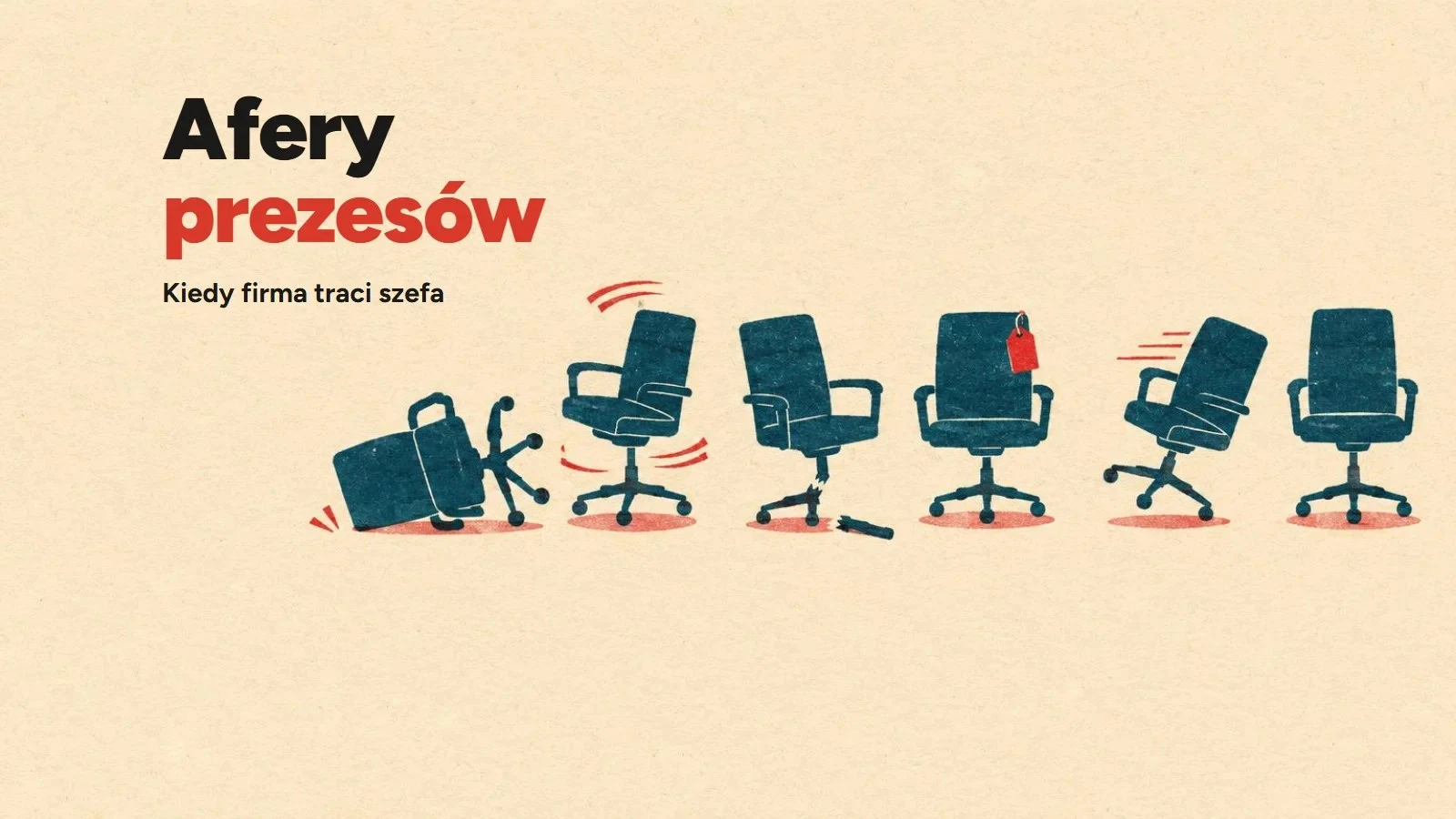
Tech CEO Scandals: Intel, OpenAI, Uber, WeWork, Theranos, FTX, Nvidia
Seven tech CEO scandals, one table: what happened, who acted, how the stock or valuation reacted, and what it means for Nvidia after Jensen Huang's exit.
👁 111 reads
Jensen Huang left Nvidia on November 12, 2026, fifteen days after The New York Times article. His case has precedents, and they are worth knowing, because they show what actually decides the outcome at moments like this: not the size of the scandal, but who holds power in the company, whether a successor is ready, and how much money the company needs from other people. On this page I collect the most important CEO scandals in tech. Each article answers the same questions: what happened, what the board did, how the stock or valuation reacted, and what it teaches us about Nvidia. Every number is sourced, and I keep allegations separate from verdicts.
Six tech CEO scandals compared
| CEO, company, year | What happened | Who acted | Valuation or stock |
|---|---|---|---|
| Brian Krzanich, Intel, 2018 | Violation of the ban on relationships between managers and employees | The board, within days; the CFO became interim CEO | Stock -2.4% on the day of the announcement |
| Sam Altman, OpenAI, 2023 | The board accused him of not being candid; he returned after five days | The nonprofit board; employees and Microsoft reversed it | Microsoft -1.7%, then +2.1%; OpenAI went from $86 billion to $852 billion in 2.5 years |
| Travis Kalanick, Uber, 2017 | A series of scandals over company culture, the Holder report | Five investors, by letter rather than a board vote | About $69 billion, then about $48 billion in SoftBank’s share purchase |
| Adam Neumann, WeWork, 2019 | The prospectus revealed losses and the founder’s voting control | The market, the banks and SoftBank | $47 billion in January, about $8 billion in October 2019 |
| Elizabeth Holmes, Theranos, 2015-2018 | Fraud against investors, sentenced to 11 years and 3 months | A journalist, a regulator, the SEC and prosecutors, not the board | About $9 billion; at liquidation about $5 million left to distribute |
| Sam Bankman-Fried, FTX, 2022 | Customer money in the Alameda fund, sentenced to 25 years | The bankruptcy court and a new restructuring chief | $32 billion in January 2022, bankruptcy in November |
These cases are not of equal weight, and they should not be lumped together. Holmes and Bankman-Fried received final convictions for fraud. Krzanich, Kalanick and Neumann were never sentenced: their cases were settled by boards, investors and the market. In Altman’s case, a review commissioned by the new board concluded that his conduct did not require removal. No one has brought charges against Jensen Huang.
Articles in the series
- Jensen Huang leaves Nvidia: day-by-day timeline of the 15 days that led to it
- Brian Krzanich Leaves Intel in 2018: Why the CEO Resigned
- Sam Altman Fired and Rehired: What Happened at OpenAI in November 2023
- Why Travis Kalanick Left Uber in 2017: Timeline and Investor Revolt
- Adam Neumann, WeWork and the Failed 2019 IPO: What Happened
- Why the Theranos Board Failed to Stop Elizabeth Holmes
- Sam Bankman-Fried and the FTX Collapse: How It Fell in 9 Days
- Jensen Huang / Nvidia
Three patterns that repeat in every case
Control over votes sets the pace. Where the founder controlled the vote, as Holmes did at Theranos or Neumann at WeWork with 20 votes per share, the board could only ask, and outsiders decided the outcome. Where shares were equal, as at Intel and Nvidia, the board could act on its own.
An interim CEO first, the search later. On the day Krzanich left, Intel named CFO Bob Swan, and the market took it calmly. After Kalanick left, Uber had no CEO, no chief operating officer and no CFO, and the search for a successor took more than two months. OpenAI had three CEOs in five days. In the same filing that announced Huang’s departure, Nvidia named CFO Colette Kress.
A company that doesn’t need money from the market survives a scandal. WeWork and FTX collapsed because the scandal hit at the moment they needed money: an IPO or customer trust. Intel and Nvidia had record revenue, so their stocks fell by a percentage, not to zero.
Nvidia in 2026: the latest case
From October 28 to November 12, 2026, Nvidia’s stock fell more than 23 percent, while the SOX semiconductor index fell 10 percent. Until the memo in which Huang admitted to infidelity, Nvidia was falling more slowly than the sector; after that, the two diverged by more than ten percentage points. I cover the day-by-day chronology in the report Fifteen Days That Changed Nvidia, and all of my articles about the company are on the page Nvidia: stock, chips and the Huang case.
Frequently asked questions
Which tech CEOs have left because of scandals?
The best-known cases are Brian Krzanich of Intel (2018, a relationship with an employee), Travis Kalanick of Uber (2017, investor pressure after a series of scandals), Adam Neumann of WeWork (2019, a failed IPO), Elizabeth Holmes of Theranos (fraud, sentenced in 2022), Sam Bankman-Fried of FTX (bankruptcy in 2022, sentenced in 2024) and Jensen Huang of Nvidia (2026). Sam Altman was fired from OpenAI in 2023 but returned after five days.
Can a board remove the founder of a company?
It depends on the voting structure. If the founder holds shares with multiple votes, as Neumann did at WeWork or Holmes at Theranos, the board practically cannot remove him or her without consent. If shares are equal, as at Intel or Nvidia, the board majority required by the bylaws is enough.
How does the stock market react when a CEO leaves?
It varies, and it mainly depends on whether the company names a successor right away and whether its business is healthy. Intel lost 2.4 percent on the day Krzanich left, HP lost 8 percent in the first session after Mark Hurd’s departure in 2010, and Nvidia fell 13.1 percent at the open on November 12, 2026.
Sources
- SEC: Nvidia Form 8-K (Nov 11-12, 2026)
- Intel: Krzanich resigns, Swan interim CEO (June 21, 2018)
- TechCrunch: Uber CEO Travis Kalanick resigns (June 20, 2017)
- SEC: The We Company S-1 prospectus (Aug 14, 2019)
- Reuters (Fox Business): WeWork valued at 8 billion (Oct 24, 2019)
- SEC: Theranos, Holmes and Balwani charged with massive fraud (Mar 14, 2018)
- DOJ: Elizabeth Holmes sentenced (Nov 18, 2022)
- Fortune: WilmerHale review of OpenAI (Mar 8, 2024)
- CNBC: FTX valued at 32 billion (Jan 31, 2022)
- Bloomberg Law: Bankman-Fried sentenced to 25 years (Mar 28, 2024)
- Yahoo Finance: quotes for INTC, HPQ, MSFT, NVDA, ^SOX
More on this from QUANTSLANT


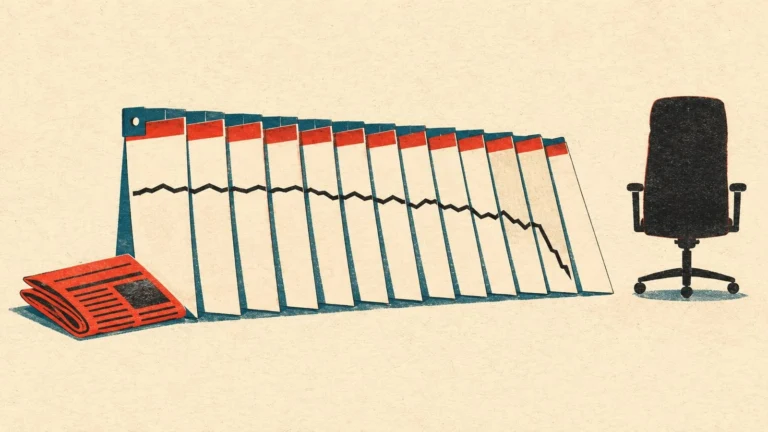 news·Jensen Huang leaves Nvidia: day-by-day timeline of the 15 days that led to itNvidia fell 22.8% in 15 days as Jensen Huang went from CEO to resignation. A day-by-day timeline built from filings, closing prices and press reports.