FLUX 3 Image: resolution tests, layout control, editing and prices
Review FLUX 3 Image detail, bounding-box layouts and editing tests, with current pricing caveats, original galleries and a FLUX.2 comparison.
👁 124 reads
FLUX is the image-model family from Germany’s Black Forest Labs. This guide covers FLUX 3 Image, released on October 1, 2026, using the source author’s launch-day tests of high-resolution detail, bounding-box composition and multi-region editing. It also covers earlier FLUX.2 variants. Pricing note checked October 12: fal.ai’s page says its launch discount ended October 8 and gives $0.048 for a 1K image afterward. Historical test costs below are not current promotional offers. The company’s separate video model is covered in FLUX 3 Video.
The source author ran the tests on October 1, 2026 through fal.ai, using one attempt per model without selecting a best result. Scripts calculated the reported detail, IoU and SSIM measurements. Where input methods differed, particularly JSON boxes versus prose, that difference is noted. No new generation was performed for this adaptation.
Five FLUX 3 Image features
- High-resolution output. The source lists five tiers: 512sq, 768sq, 1k, 2k and 4k. Its 4k output was 5456 × 3072 pixels, and one such generation took more than six minutes.
- Bounding-box composition. The source workflow uses a 0-1000 coordinate grid. Each object receives an identifier, description and box in [y_min, x_min, y_max, x_max] order. It performed better in the tested layouts than rivals given prose-only positions, which is a comparison of input workflows as well as models.
- Several edits in one request. The manufacturer claims preservation of pixels outside edited regions. The source test measured SSIM 0.995 in the areas intended to remain unchanged. That is very high similarity, but it is not evidence of bit-for-bit identity.
- Up to ten reference images. The source describes references named ref_image_0 through ref_image_9 and a four-megapixel limit per input through its fal.ai editing route. Confirm the current schema for your endpoint.
- Weights and licensing. At launch, the source reported commercial weight licensing and an open release planned within weeks. An announcement is not confirmation that weights are downloadable today; check the official release and license for the exact variant.
Source tests and example galleries
 01FLUX 3 4K Test: Real Resolution vs 6 AI Image ModelsFLUX 3 Image delivers true 4K with 16.8 Mpx of real detail. We tested it against six models to measure effective resolution, text accuracy, and speed.Read →
 02FLUX 3 Bounding Box Test vs 5 ModelsFLUX 3 Image placed all 16 objects in their assigned boxes (IoU 0.890). We tested JSON bounding boxes against Seedream 5 Pro, GPT Image 2.5, and three others.Read →
 03FLUX 3 Image: 5 Edits in One Prompt vs 6 Other ModelsAll seven models made five changes from one prompt, but only FLUX 3 Image left the rest of the photo untouched. SSIM 0.995 vs Grok's 0.708.Read →
 04FLUX 3 4K Wallpapers: 12 Desktop & Phone Backgrounds (Prompts)Twelve 4K wallpapers generated with FLUX 3 Image: six for desktop (5456 × 3072 px) and six for phone (3072 × 5456 px). Full prompts included, around $0.40 per wallpaper.Read →
 05FLUX 3 Interior Design: 10 Visualizations with PromptsWe generated ten interior design visualizations with FLUX 3 Image, from japandi living rooms to tiny bathrooms. Prompts, scores, and notes for staging.Read →
 06FLUX 3 Product Photography: 10 AI Ads & PackshotsWe generated 10 product images in FLUX 3: packshots, ads with slogans, and flat lays. Text came out perfect, but the model added real brand logos we didn't ask for.Read →
 07FLUX 3 JSON Layouts: 8 Design Templates with PromptsFLUX 3 Image accepts JSON prompts with bounding boxes for each element. We tested 8 real-world layouts: magazine covers, comics, posters, and more.Read →
 08FLUX 3 Image: Native 4K, Bounding Boxes & Multi-EditBlack Forest Labs released FLUX 3 Image on October 1, 2026: native 4K up to 5456×3072px, bounding box composition, and multi-area editing without touching the rest.Read →
Test 1: inspecting high-resolution detail
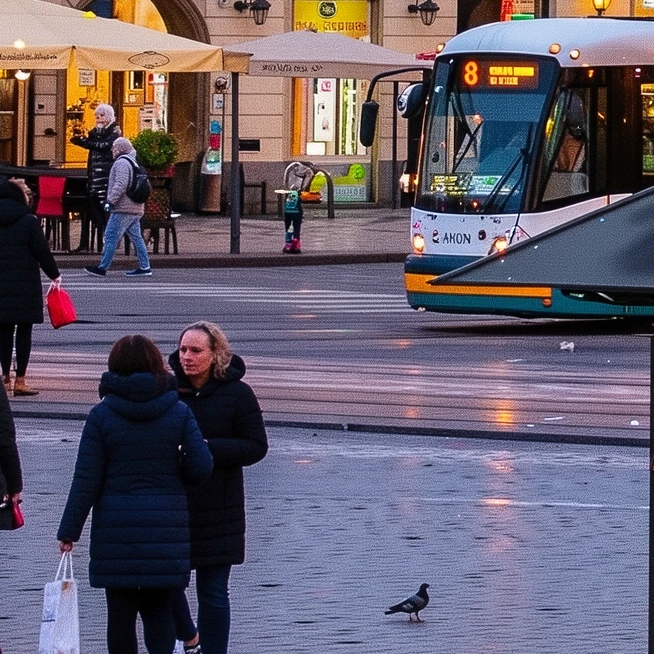
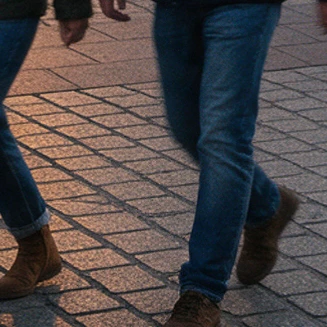
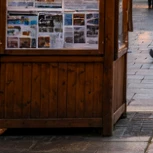
The source author generated the same Krakow market-square scene at each model’s highest available resolution. The prompt included small signs, a kiosk and a tram. A downscale-and-upscale analysis estimated whether additional pixels contained meaningful detail: if the reconstructed image changed little, the extra output pixels contributed little under that method. This is an estimate of effective detail, not a universal definition of resolution.
Nano Banana Pro returned 5504 × 3072 pixels, but the source method estimated roughly a quarter as much effective detail. FLUX 3 reached 16.8 megapixels under that analysis, the highest result in the tested set. Lettering was a separate weakness: across the eight signs scored in the detailed test, GPT Image 2.5, Grok and Seedream scored eight, Nano Banana Pro seven, and FLUX 3 six. The detailed method and pixel-level crops are in the high-resolution test.

Test 2: composing a scene with boxes
The source used four scenes, a desk, a Sopot beach, a kitchen and a water advertisement, each with four precisely specified objects. FLUX 3 received JSON bounding boxes, while other models received equivalent positions described in prose as percentages. A vision model estimated the resulting object boxes, and intersection-over-union measured overlap with the targets, where 1 means identical boxes. Because the input methods and automated localization differ, this is not a clean isolation of model capability alone.
| Model | Mean IoU | Objects correctly placed |
|---|---|---|
| FLUX 3 Image, JSON boxes | 0.89 | 16/16 |
| Seedream 5.0 Pro | 0.79 | 15/16 |
| GPT Image 2.5 Sunburst | 0.54 | 11/16 |
| Nano Banana Pro | 0.48 | 7/16 |
| Ideogram 4.5 | 0.37 | 7/16 |
| Qwen Image 3 | 0.35 | 6/16 |
Explicit placement can help with covers, advertisements and banners that reserve space for text or a logo. The source’s images with overlaid target and detected boxes are in the composition test.
Test 3: five changes in one prompt
The source used a photograph of a Warsaw apartment living room and requested five changes: a different sofa, a photograph of the Palace of Culture replacing a painting, removal of a vase, a black lampshade and a sleeping dachshund on the rug. All seven models made the requested edits. The comparison focused on how much the surrounding image changed.
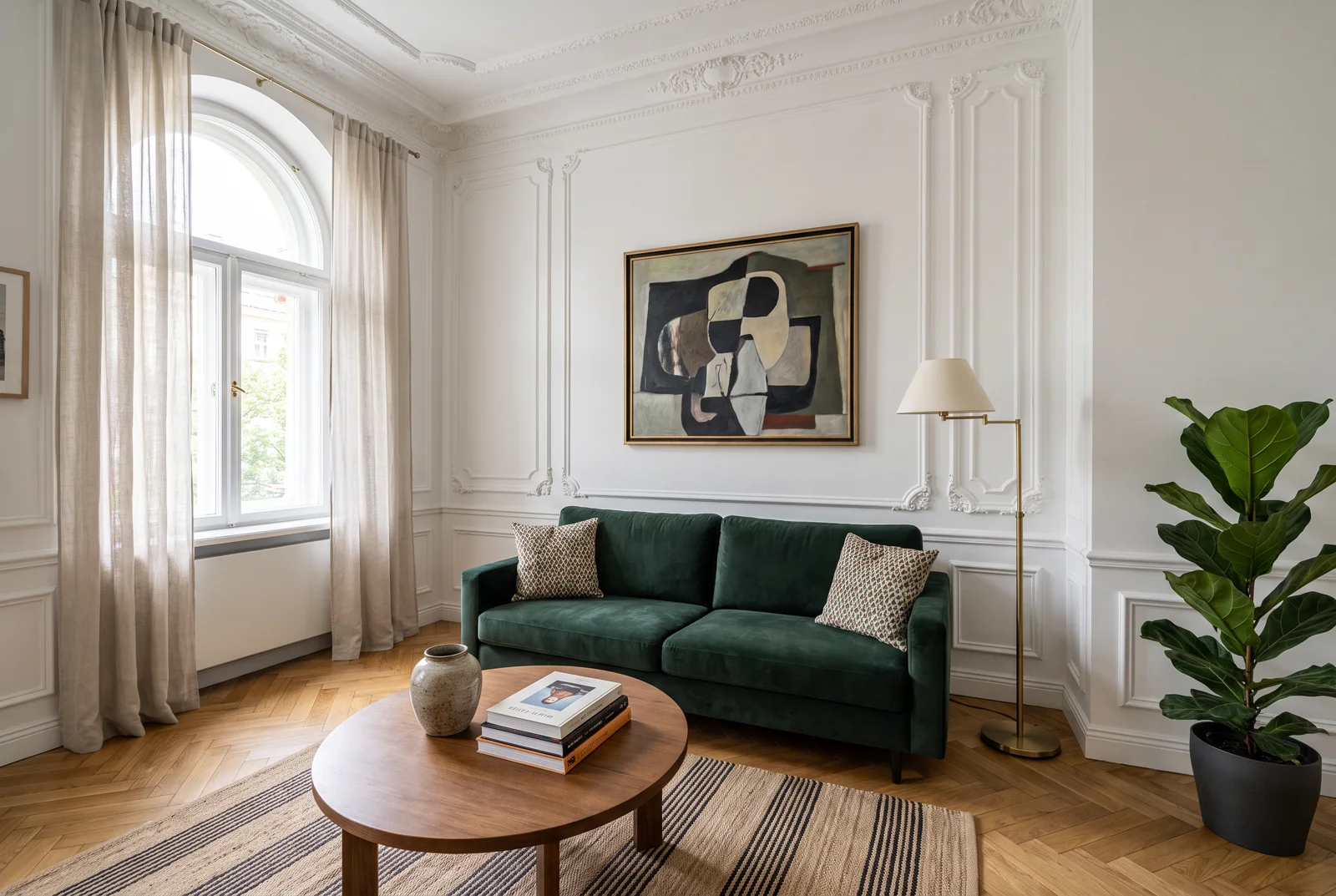
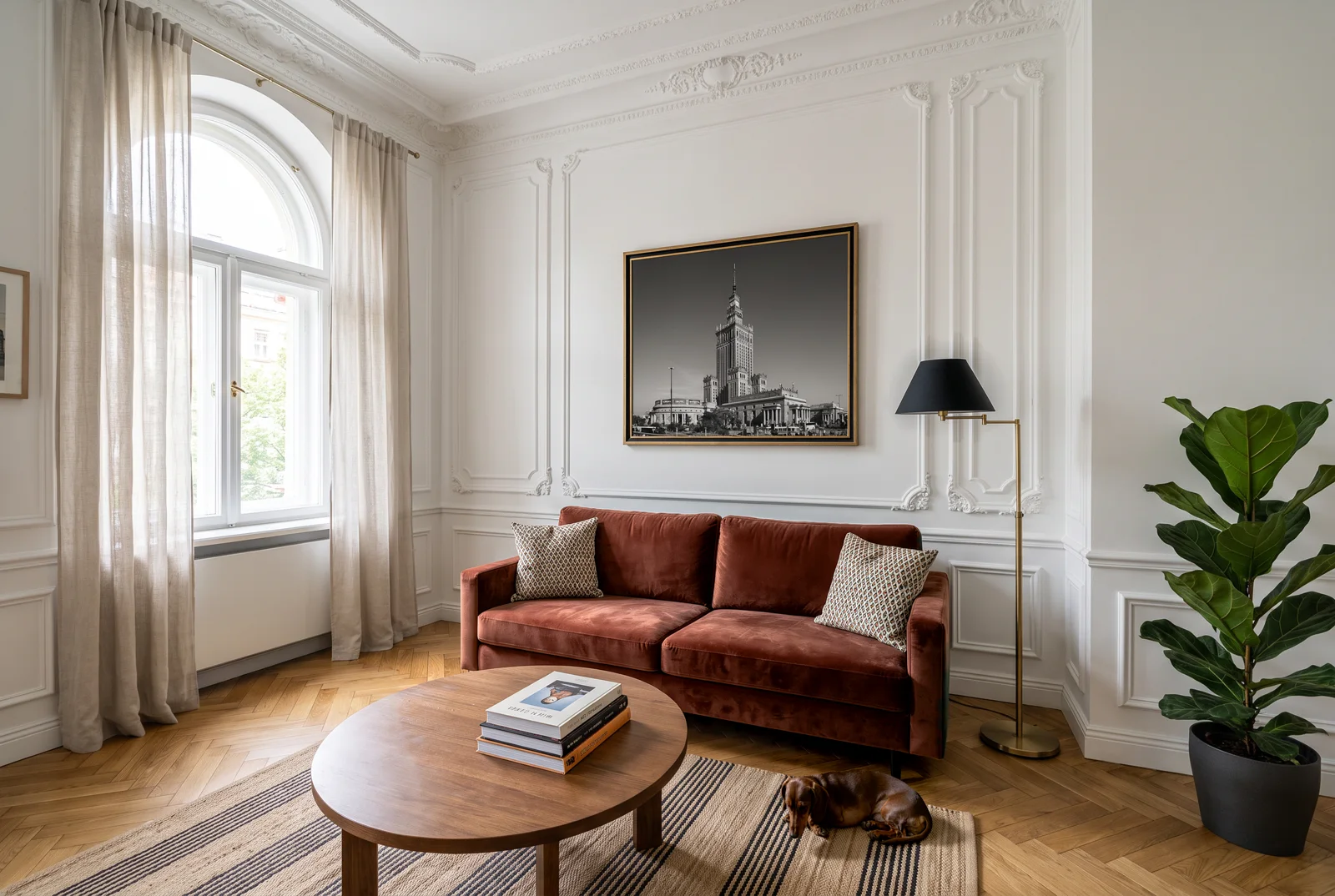
FLUX 3 and Ideogram 4.5 preserved unedited regions best in this particular comparison. That result does not guarantee perfect preservation on every image. The earlier Ideogram sequence is documented in the ten-consecutive-edits test.
Galleries with prompts
- Desktop and phone wallpapers - source examples include mountains, the Baltic coast, Warsaw at night and abstract images, with prompts for variations. These remain the original examples rather than invented local test scenes.
- Interior visualization - examples include Japandi styling, an apartment kitchen, a Lodz loft and a Zakopane cabin.
- Advertisements and product shots - perfume, sneakers, coffee, chocolate and a watch.
- JSON bounding-box layouts - magazine cover, comic, recipe, poster and storyboard.
FLUX 3 Image pricing and the expired launch offer
| Provider | Price reference | Conditions |
|---|---|---|
| fal.ai text-to-image and editing routes | Text-to-image page: $0.048 for a 1K image after October 8 | The source launch estimate was about $0.024 for 1K, $0.10 for 2K and $0.40 for 4K. Those discounted figures are historical; check the selected endpoint and resolution tier. |
| Black Forest Labs API | The source’s 50% launch discount ended October 8 | Use the current BFL calculator and dashboard for the selected model and resolution |
The fal.ai page checked on October 12 still displays its old launch-rate wording, but explicitly says the discount ends October 8 and the subsequent 1K price is $0.048. It describes resolution-tier pricing per image, so this guide does not assume that every current output is billed by simply multiplying its exact megapixel count. The source’s approximately $0.40 4K test-era estimate should not be presented as today’s quote. Confirm the tier, edit-input charges if applicable and tax before a paid run.
Earlier models: FLUX.2
The source dates FLUX.2 to November 2025 and the smaller klein variants to January 2026. The rates below are its historical starting figures, not a replacement for the current calculator. Model and input/output settings affect the charge.
| Variant | Typical use | BFL API starting price in the source | Weights and source license description |
|---|---|---|---|
| FLUX.2 [klein] 4B | Fast batches and local hardware | From $0.014 | Yes, Apache 2.0 for the named 4B repository |
| FLUX.2 [klein] 9B | Higher quality with a compact model | From $0.015 | Downloadable; check the non-commercial or separate commercial terms |
| FLUX.2 [pro] | Production API workflows | From $0.03 | No released weights in the source |
| FLUX.2 [flex] | Typography and detailed control | From $0.05 | No released weights in the source |
| FLUX.2 [max] | Highest tier in this source comparison | From $0.07 | No released weights in the source |
| FLUX.2 [dev] | 32 billion parameters; local deployment | - | Downloadable; check the non-commercial or separate commercial terms |
In the September source image-generator comparison , FLUX.2 Pro scored 7.6/10 and sixth of eight, with a 13-second run and strong photographic output. It missed two diacritics on the requested Polish sign. For local use, the official FLUX.2-klein-4B model card lists Apache 2.0 and hardware requirements as low as 13 GB of VRAM; actual memory depends on the implementation and settings.
The FLUX 3 family also includes a video model with audio, covered separately in the FLUX 3 Video guide.
Which workflow fits which task?
| Task | Candidate from the source comparison | Reason and limit |
|---|---|---|
| Large print or wallpaper | FLUX 3 Image (4k) | Highest estimated effective detail in the source test, 16.8 megapixels |
| A layout reserving space for a logo or text | FLUX 3 Image with boxes | 16 of 16 objects placed in the tested workflow |
| Several changes to a client photo | FLUX 3 or Ideogram 4.5 | High preservation of surrounding regions in the source scene; inspect each result |
| Graphics with substantial Polish lettering | Nano Banana Pro or GPT Image 2.5 | More correct signs in that language-specific test; test English separately |
| Generation on local hardware | FLUX.2 [klein] 4B | The named official repository is labeled Apache 2.0 |
Frequently asked questions
Is FLUX 3 Image free?
The API routes are paid. The fal.ai page checked October 12 states $0.048 for a 1K image after the October 8 promotion. The source’s open-weight release statement was a plan, not proof of current availability. FLUX.2-klein-4B has downloadable weights, but running them still involves hardware and electricity costs.
How do bounding-box prompts work?
The source workflow places a scene caption and element list in JSON. Each element has an id, desc and bbox, using y_min, x_min, y_max, x_max coordinates on a 0-1000 grid. Check the endpoint’s supported schema before sending a request. Examples appear in the layout gallery.
What does the lettering test show?
Short wordmarks worked well in the source examples, but FLUX 3 reproduced six of eight small signs in the detailed scene, versus eight for GPT Image 2.5, Grok and Seedream. Those were language-specific examples, not a controlled English typography benchmark. Inspect important lettering at full size and correct it if needed.
How long does 4K generation take?
The source author recorded approximately three to more than six minutes per 4K image, around one minute at 1k and one to three minutes at 2k. Provider load and settings can change those times.
How does FLUX 3 differ from FLUX.2?
The source highlights higher-resolution output, box-guided composition, multiple local edits and up to ten references. Its FLUX.2 comparison was limited to four-megapixel output. Compare the specific endpoint and license, because a family name does not establish identical features or pricing for every variant.
- Black Forest Labs: FLUX 3 Image
- fal.ai: FLUX 3 Image text-to-image pricing
- AlphaSignal: FLUX 3 Image and bounding boxes
- Black Forest Labs pricing
- Source author’s October 1, 2026 tests: images, scripts and effective-detail, IoU and SSIM measurements. The fal.ai pricing note and official FLUX.2-klein-4B model card were checked on October 12. No new generation was performed for this adaptation.
Official local-model reference: FLUX.2-klein-4B model card and license.
More on this from QUANTSLANT

 ai tools·Seedance 2.5: Versions, Pricing, Rankings and Test ResultsSeedance 2.5 ranks third in Artificial Analysis text-to-video, but our Polish-language tests exposed weak speech and text rendering.